




China Top 10 Silk Like Fabric Manufacturers for Global Buyers

Silk Like Fabric is changing how global buyers approach softness, shine, and everyday performance. It can resemble silk closely, yet its composition may include polyester, rayon, acetate, nylon, or blended fibers. That difference matters.

This guide introduces China’s top 10 Silk Like Fabric manufacturers for international sourcing teams. The selection considers manufacturing experience, fabric consistency, customization, testing practices, export capability, and communication quality. A reliable supplier should explain fiber content clearly, provide practical samples, and support inspections before shipment. Shiny fabric alone proves very little.

Textile scholar and sustainability expert Kate Fletcher has stated, “Sustainability is not about doing less harm. It’s about doing more good.” Her words are useful here. Buyers should look beyond a smooth showroom swatch and examine durability, dye performance, traceability, and end-use suitability. A dress lining, hotel curtain, scarf, and luxury packaging fabric require different specifications.

This list is not a perfect verdict. Supplier capabilities can change. Product pages may also simplify technical details. Therefore, buyers should confirm GSM, width, construction, colorfastness, shrinkage, minimum order quantity, and compliance documents directly with each manufacturer.

Small details matter.

A careful comparison can reduce sampling delays and avoid costly mismatches. The featured companies represent different strengths, from large-scale production to flexible development services. Their products may not suit every project. That is worth admitting. The strongest choice depends on your application, target market, budget, delivery schedule, and quality expectations.
China Top 10 Silk Like Fabric Manufacturers for Global Buyers

China’s Silk-Like Fabric Industry: Materials, Production, and Market Scope

China Top 10 Silk Like Fabric Manufacturers for Global Buyers

China’s Silk-Like Fabric Industry: Materials, Production, and Market Scope

China’s silk-like fabric industry serves fashion, interiors, accessories, and hospitality buyers. The category includes polyester satin, viscose, acetate, nylon, cupro, and recycled polyester. These materials imitate silk’s softness, shine, fluid drape, or smooth surface. They are not identical to natural silk. Each option carries different costs, durability, breathability, and care requirements.

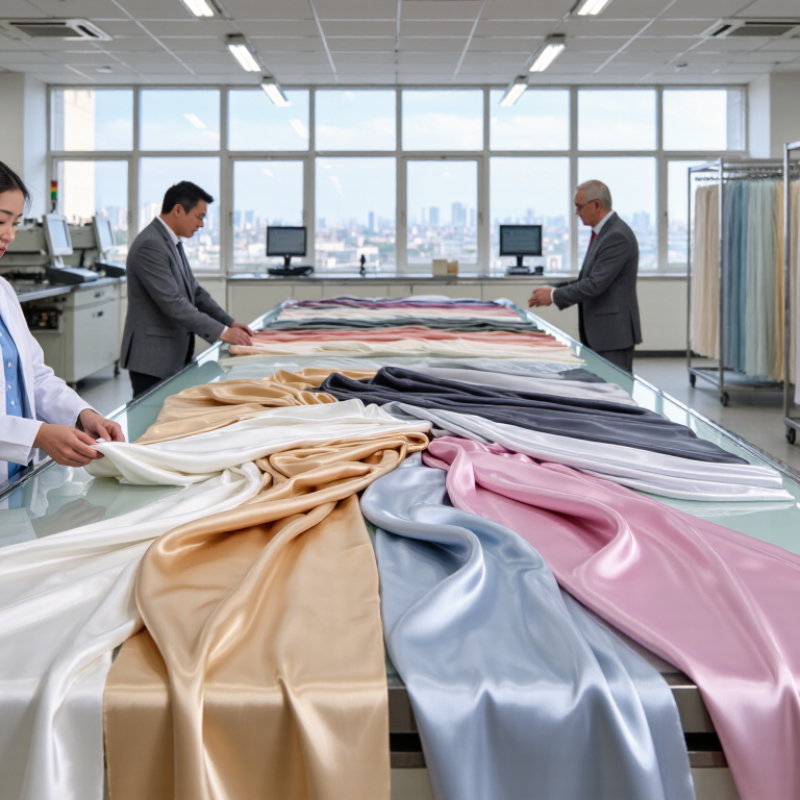
Production usually begins with filament selection and yarn preparation. Mills then weave or knit the fabric before dyeing and finishing it. Calendering can create a brighter surface, while brushing adds a softer touch. During factory visits, buyers should inspect roll edges, surface consistency, and shade variation. A small swatch can hide problems. Larger production rolls reveal them.

Testing remains important for international purchasing. Buyers commonly review fiber composition, colorfastness, shrinkage, pilling, tear strength, and seam performance. Destination-market requirements may also affect labeling and chemical documentation. Recycled fibers can support sustainability goals, but certificates and transaction records need careful verification. The market spans eveningwear, scarves, linings, pajamas, curtains, and decorative cushions. I have seen glossy samples feel attractive yet become uncomfortable in warm conditions. That detail deserves more attention. No substitute performs like silk in every setting, and buyer specifications sometimes remain too general.

How to Evaluate China’s Top Silk-Like Fabric Manufacturers

How to Evaluate China’s Top Silk-Like Fabric Manufacturers

Evaluating silk-like fabric manufacturers requires more than comparing catalog photos. Check whether the supplier understands polyester satin, rayon, acetate, and blended constructions. Ask for technical sheets showing fiber content, fabric weight, width, weave, finishing process, and shrinkage data. A reliable manufacturer should explain these details clearly, not hide behind vague terms such as “premium quality.”

Request a current sample before discussing bulk production. Examine its softness, drape, surface shine, color consistency, and edge stability under different lighting. Rub the fabric gently and inspect it after washing. Small defects matter. A beautiful sample can still fail during mass production.

Ask for inspection records, testing methods, production capacity, minimum order quantities, and realistic lead times. Factory photos are useful, but a video audit or independent inspection offers stronger evidence.

Communication also reveals manufacturing discipline. Notice how quickly the team answers technical questions and records changes. Confirm whether they can keep a sealed reference sample for bulk comparison. Export experience helps, but it does not replace product knowledge. Some suppliers communicate confidently yet provide incomplete data. That should make buyers pause. Even experienced sourcing teams can judge fabric incorrectly when lighting, finishing, or seasonal humidity changes. Build a testing plan, document every approval, and leave room for honest rechecking.

Top 10 Chinese Silk-Like Fabric Manufacturers for Global Buyers

Top 10 Chinese Silk-Like Fabric Manufacturers for Global Buyers

China’s top ten silk-like fabric manufacturers serve fashion, bridalwear, lingerie, scarves, and home decoration markets. Many operate near major textile centers such as Suzhou, Shengze, Hangzhou, and Keqiao. Their collections may include satin, charmeuse, crepe, chiffon, and polyester silk substitutes. Some also produce acetate or viscose blends for buyers seeking softer hand-feel and improved drape.

A reliable manufacturer should provide composition details, fabric width, weight, shrinkage data, colorfastness reports, and clear production timelines. Requesting swatches remains essential. A fabric can look glossy online but feel stiff under showroom lighting. Ask for test samples after washing, especially for flowing garments. Discuss minimum order quantities, dye-lot control, packaging, and inspection procedures before placing an order. These practical checks often reveal more than a polished product catalogue.

The top ten should not be judged by price alone. Production consistency, communication, sampling speed, and corrective support matter greatly. Some factories are strong in large-volume polyester satin, while others handle delicate blended fabrics better. No list is perfect. A supplier may perform well for scarves but struggle with wide-width upholstery fabric. Buyers should compare at least three samples, verify current certificates, and record every specification in writing. This process takes time, but it reduces surprises during bulk production.

Product Quality, Customization, Certifications, and Export Capabilities

China’s top ten silk-like fabric manufacturers should be judged beyond surface shine. Textile Exchange reports that global fiber production reached about 124 million tonnes in 2023 and may approach 160 million tonnes by 2030. This growth increases pressure on suppliers to prove material quality, not merely offer attractive samples. Buyers should request GSM tolerance, colorfastness results, shrinkage data, and batch-level inspection records. A fabric that feels smooth in a showroom may perform poorly after washing.

Customization is a practical strength among experienced Chinese manufacturers. They can adjust filament denier, weave density, satin luster, width, dye shades, and finishing methods for apparel, bedding, or scarves. Reliable factories provide laboratory dips, pre-production samples, and approval checkpoints. Certifications also matter. ISO 9001 supports quality management, while OEKO-TEX STANDARD 100 tests harmful substances in finished textiles. For recycled inputs, buyers should verify valid GRS documents and transaction records. Certificates alone are not enough.

Export capability requires more than a shipping department. Suppliers should explain carton protection, moisture control, HS classification, inspection procedures, lead times, and destination-market documentation. UN Comtrade trade data can help buyers compare China’s textile export performance with competing sources. In practice, communication speed often reveals operational discipline. Still, no supplier is perfect. Even a certified factory may miss a shade tolerance or delay a customized order. Independent pre-shipment inspection remains sensible, especially for large-volume contracts.

China Top 10 Silk Like Fabric Manufacturers for Global Buyers - Product Quality, Customization, Certifications, and Export Capabilities

Comparative procurement benchmark for silk-like fabric suppliers in China

Rank Supplier Profile Primary Silk-Like Fabrics Typical Weight Typical Width Customization Scope Quality & Testing Certifications / Documents Export Capability Indicative MOQ Indicative Lead Time
1 Supplier Profile A Polyester satin, charmeuse, bridal satin 80–180 gsm 145–150 cm Custom colors, yarn count, finish, print, and embossing Colorfastness, shrinkage, tear strength, pilling, and dimensional stability ISO 9001 or equivalent; OEKO-TEX documentation available for selected articles Regular container and LCL shipments to Europe, North America, and Asia 500–1,000 meters 15–30 days
2 Supplier Profile B Viscose satin, rayon twill, fluid crepe 90–200 gsm 140–150 cm Reactive or pigment dyeing, digital printing, softening, and sand washing Wash durability, color migration, pH, formaldehyde, and rubbing fastness OEKO-TEX testing support; REACH-related substance declarations available Experienced in retail, apparel, and private-label order documentation 800–1,500 meters 20–35 days
3 Supplier Profile C Recycled polyester satin, recycled charmeuse, lining fabrics 70–160 gsm 145–155 cm Recycled content percentage, custom dyeing, calendering, and water-repellent finishes Fiber composition, recycled-content verification, colorfastness, and abrasion tests GRS transaction documentation may be available; ISO 9001 support varies by facility Suitable for consolidated export orders and sustainability-focused sourcing programs 1,000–2,000 meters 25–40 days
4 Supplier Profile D Nylon satin, stretch satin, lightweight lining 60–140 gsm 145–150 cm Elastane ratio, four-way stretch, coating, lamination, and custom color matching Stretch recovery, snagging, abrasion, colorfastness, and coating adhesion OEKO-TEX testing can be arranged for qualified production lots Regular export packaging; suitable for fashion, lingerie, and performance garments 500–1,000 meters 18–30 days
5 Supplier Profile E Acetate-like satin, glossy woven fabrics, fluid dress materials 90–180 gsm 140–150 cm Custom luster, drape, hand feel, dyeing, printing, and finishing recipes Drape, seam slippage, colorfastness, shrinkage, and surface appearance Material composition reports and restricted-substance testing available by order Supports sample development and small-to-medium international fashion orders 300–800 meters 20–35 days
6 Supplier Profile F Polyester crepe satin, matte satin, sanded satin 100–220 gsm 145–155 cm Custom texture, face/back contrast, brushing, coating, print, and color development Pilling, abrasion, seam performance, shrinkage, and washing tests ISO 9001 may be available; third-party inspection and lab reports can be requested Suitable for bulk apparel programs with carton or roll export packing 1,000–3,000 meters 25–45 days
7 Supplier Profile G Viscose-polyester blends, satin twill, soft drapey fabrics 100–240 gsm 140–150 cm Blend ratio, width, color, printing, finishing, and private-label packaging Blend composition, colorfastness, dimensional stability, pH, and formaldehyde REACH-related declarations and OEKO-TEX testing support may be provided Handles repeat orders for wholesalers, converters, and garment manufacturers 800–1,500 meters 20–40 days
8 Supplier Profile H Cupro-like fabrics, premium rayon satin, breathable linings 75–160 gsm 135–150 cm Custom hand feel, moisture management finish, dyeing, printing, and width Breathability, moisture management, shrinkage, pilling, and colorfastness Fiber-content verification and chemical compliance reports available by request Appropriate for premium apparel and specialty lining programs 500–1,000 meters 25–40 days
9 Supplier Profile I Digital-print satin, printed charmeuse, scarf fabrics 60–150 gsm 140–150 cm Artwork matching, digital printing, rotary printing, border placement, and color calibration Print registration, color accuracy, rubbing fastness, wash fastness, and shrinkage Print test reports and restricted-substance testing can be arranged Supports sampling, artwork approval, and export-ready roll packing 200–600 meters per design 15–30 days after artwork approval
10 Supplier Profile J Silk-blend satin, premium polyester silk-like fabric, jacquard satin 90–220 gsm 140–150 cm Silk ratio, weave structure, jacquard pattern, custom dyeing, and finishing Fiber composition, colorfastness, seam slippage, abrasion, and dimensional stability Composition certificates, lab reports, and origin documents available according to order requirements Suitable for premium fashion, occasionwear, scarves, and boutique collections 300–1,000 meters 25–45 days
Procurement note: The quantities, lead times, widths, and weight ranges are indicative industry benchmarks for China-based silk-like fabric production. Actual specifications, certifications, testing results, minimum order quantities, and delivery schedules should be confirmed with the selected manufacturer before purchase.

How Global Buyers Can Compare Suppliers and Choose the Right Partner

When comparing the top 10 silk-like fabric manufacturers, global buyers need more than catalog photos. Textile Exchange’s Materials Market Report 2024 recorded 124 million tonnes of global fiber production in 2023. Polyester represented about 57% of that volume. Recycled fibers accounted for roughly 12%. These figures explain why many suppliers offer polyester satin, but fiber volume does not prove fabric quality.

Request identical samples from every shortlisted manufacturer. Check weight, width, denier, weave density, gloss, drape, and colorfastness. A 95 gsm satin may feel elegant on a display table, yet become transparent under studio lighting. Ask for test reports from an independent laboratory. Review abrasion, pilling, shrinkage, seam slippage, and wash performance. Small details matter.

Supplier comparison should also measure minimum order quantity, sample speed, production lead time, defect handling, and traceability. The Sustainable Apparel Coalition’s Higg Materials Sustainability Index shows that fiber choices can create different environmental impacts, so buyers should request specific material data instead of accepting vague “eco” claims. Recycled content needs supporting evidence. It is easy to overlook this. A low quotation can hide unstable dye lots, delayed replenishment, or inconsistent hand feel. I would score each supplier with the same weighting, then inspect production samples before signing a long-term agreement. No spreadsheet replaces a fabric swatch.

China Top 10 Silk-Like Fabric Manufacturers for Global Buyers

How Global Buyers Can Compare Suppliers and Choose the Right Partner

This buyer-screening framework ranks the most important comparison dimensions for shortlisting silk-like fabric suppliers. Buyers should verify each area through laboratory reports, production samples, factory audits, certifications, and export documentation before selecting a partner.